

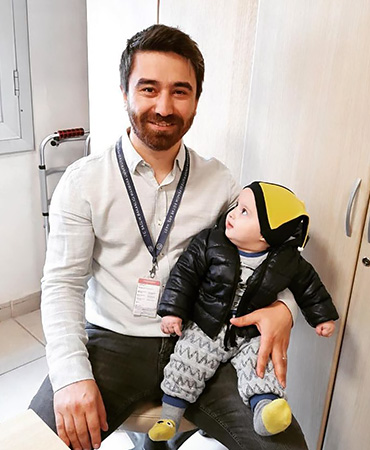
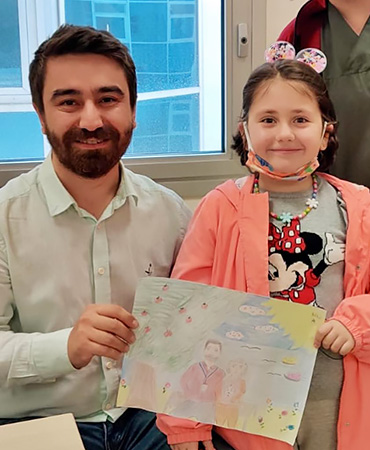
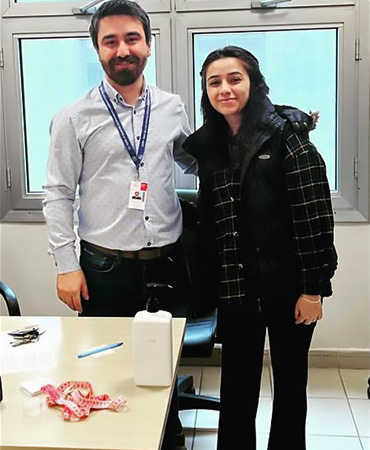
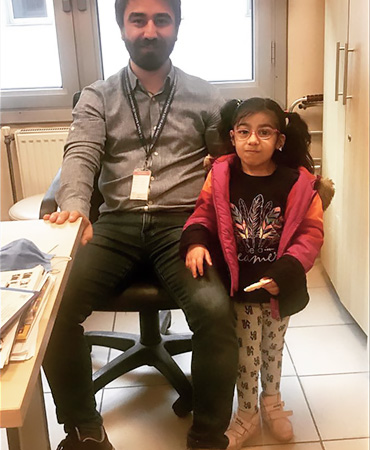
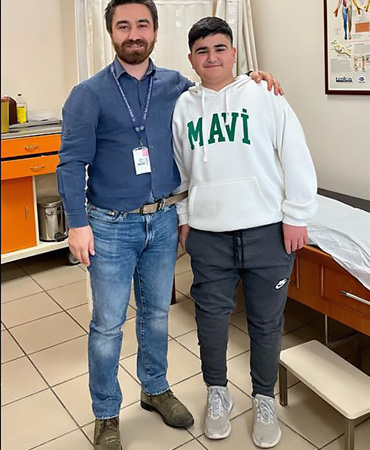
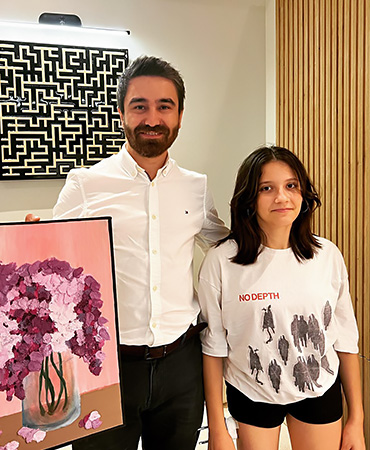
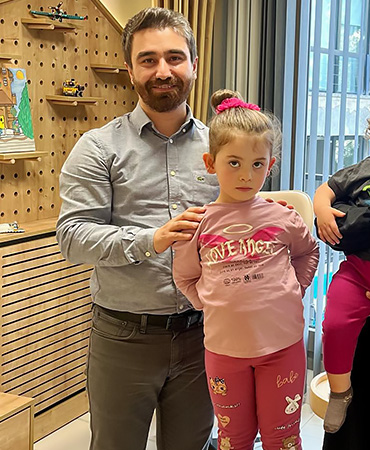


Assoc. Dr. Murat Kaya

Phzt. Burakcan Yesilel

Aigerim Ilyassova


- Spine Diseases
- Pediatric Orthopedics
- Hand and Upper Extremity
- Infection and Oncology


Kyphosis
Kyphosis is a spinal condition characterized by an excessive outward curvature of the spine, leading to a noticeable hump and potential back pain.

Scoliosis
Scoliosis is a spinal deformity characterized by a sideways curvature of the spine, often detected in adolescents and can vary in severity.

Spondylolysis and Spondylolisthesis
Spondylolysis refers to a stress fracture in a vertebra, while spondylolisthesis occurs when one vertebra slips over another, often causing lower back pain.

Adolescent Disc Disease
Adolescent disc disease involves early degeneration of spinal discs, leading to back pain and discomfort. It is uncommon in teenagers and requires careful management.

Spina Bifida
Spina bifida is a congenital condition where the spinal cord does not develop properly, leading to varying degrees of disability and neurological complications.

Achondroplasia
Achondroplasia is the most common form of dwarfism, characterized by disproportionate limb and torso sizes due to a genetic mutation affecting bone growth.

Mucopolysaccharidosis
Mucopolysaccharidosis is a group of rare genetic disorders caused by the body's inability to break down glycosaminoglycans, leading to organ and tissue damage.

Arthrogryposis Multiplex Congenita
Arthrogryposis Multiplex Congenita is a condition characterized by multiple joint contractures found throughout the body at birth, often leading to limited movement.

Multiple Hereditary Exostoses
Multiple Hereditary Exostoses is a genetic disorder characterized by the growth of multiple benign bone tumors, which can cause pain and may affect bone growth and development.

Osteogenesis Imperfecta
Osteogenesis Imperfecta, also known as brittle bone disease, is a genetic disorder that causes bones to break easily due to collagen defects.

Congenital Dislocation of the Patella
Congenital Dislocation of the Patella is a rare condition where the kneecap dislocates at birth, often leading to mobility issues and requiring surgical intervention.

Congenital Talipes Equinovarus
Congenital clubfoot (PEV) is a birth defect where a baby's foot is twisted out of shape or position, requiring early treatment.

Brachymetatarsia
Brachymetatarsia is a condition where one of the metatarsal bones in the foot is abnormally short, leading to a shortened toe and potential foot deformity.

Fibular Hemimelia
Fibular hemimelia is a congenital disorder where the fibula bone in the leg is either partially or completely missing, often leading to limb length discrepancy and associated deformities.

Posteromedial Bowing of the Tibia
Posteromedial bowing of the tibia is a congenital condition characterized by a curvature of the tibia inward and backward, often leading to limb length discrepancy as the child grows.

Congenital Femoral Deficiency
Developmental Dysplasia of the Hip (DDH) is a condition in newborns where the hip joint does not form properly, potentially leading to dislocation.

Hemihypertrophy
Hemihypertrophy is a condition in which one side of the body grows more than the other, potentially leading to noticeable asymmetry and associated health complications.

Tibial Hemimelia
Tibial hemimelia is a rare congenital condition characterized by the partial or complete absence of the tibia, often leading to significant limb deformity and functional impairment.

Congenital Pseudoarthrosis of the Tibia
Congenital pseudoarthrosis of the tibia is a rare orthopedic condition where the tibia bone is abnormally thin and prone to fracture, often resulting in nonunion and bowing of the leg.
Developmental Dysplasia of the Hip (DDH)
Developmental Dysplasia of the Hip (DDH) is a condition in infants where the hip joint fails to develop properly, often leading to instability or dislocation.

Legg Calve Perthes Disease
Legg Calvé Perthes Disease affects children, disrupting blood supply to the femoral head, leading to joint damage and requiring careful management.
Toe-In - Toe-Out
Toe-in and toe-out describe the alignment of feet walking or standing; toe-in points feet inward, leading to pigeon toes, while toe-out points them outward, affecting gait and posture.

Blount Disease
Blount disease is a growth disorder affecting the shin bone (tibia), causing it to bow outward. This condition typically appears in young children and can worsen with growth.

Genu Varum - Genu Valgum
Genu varum, commonly known as bowlegs, and genu valgum, known as knock-knees, are conditions where the legs curve outward or inward, respectively, affecting alignment and gait.

Post-Traumatic Growth Arrest
Post-traumatic growth arrest is a condition where bone growth halts due to injury, leading to potential deformities and unequal limb lengths if untreated.

Tarsal Coalition
Tarsal coalition is a congenital condition where two or more bones in the foot fuse, causing pain and restricted movement.

Metatarsus Adductus
Metatarsus adductus is a common foot deformity observed in infants, characterized by the inward bending of the forefoot relative to the hindfoot, often correctable with early intervention.

Flat Foot (Pes Planus)
Flat foot (pes planus) is a condition where the arches of the feet do not develop properly, causing the entire sole to touch the ground.

High Arch (Pes Cavus)
Pes cavus, or high arches, is a condition where the arch of the foot is higher than normal, causing uneven weight distribution and potential discomfort.

Limb Length Discrepancy
Limb length discrepancy is a condition where one leg is shorter than the other, potentially causing gait abnormalities and discomfort, often requiring orthopedic intervention.

Cubitus Varus and Valgus
Cubitus varus and valgus are deformities of the elbow; varus causes the arm to angle inward, while valgus causes it to angle outward, potentially impacting arm function and appearance.

Radius and Ulna Synostosis
Radius and ulna synostosis is a congenital condition where the two forearm bones are fused, restricting rotational movement of the forearm and affecting arm function.

Radial Club Hand
Radial club hand is a congenital condition characterized by the underdevelopment or absence of the radius bone, leading to a significant deformity and limited function of the forearm and hand.

Syndactyly (Conjoined Fingers)
Syndactyly, or webbed toes, is a condition where two or more toes are fused together from birth, often requiring surgical separation if it affects function.

Polydactyly (Excess Fingers)
Polydactyly is a congenital condition characterized by having extra fingers or toes, which may require surgical removal for functional or cosmetic reasons.

Macrodactyly (Big Finger)
Foot and ankle fractures require prompt diagnosis and treatment to ensure proper healing and restore function.

Amniotic Band Syndrome
Amniotic band syndrome is a rare congenital disorder caused by strands of the amniotic sac that entangle limbs or digits, potentially leading to deformities or amputations in utero.

Madelung Deformity
Madelung deformity is a rare congenital condition characterized by abnormal growth of the wrist bones, causing a visible deformity and often leading to wrist pain and limited motion.

Brachymetacarpia
Brachymetacarpia is a condition where one or more of the metacarpal bones in the hand are unusually short, resulting in shorter fingers, which may affect hand function and appearance.

Osteomyelitis Surgery
Osteomyelitis surgery involves removing infected bone and tissue to prevent further spread of infection and restore bone health, often followed by antibiotics.

Septic Arthritis Sequelae Surgery
Septic arthritis sequelae surgery aims to repair joint damage caused by infection. It often involves debridement to remove infected tissue and restore joint function, sometimes requiring reconstruction or joint replacement.

Nonunion and Malunion Surgery
Nonunion and malunion surgery corrects bones that have failed to heal properly after a fracture. It typically involves realignment and stabilization, using grafts or implants to facilitate proper healing and restore function.

Bening Tumors
Benign tumors are non-cancerous growths in the body that do not spread to other parts. They generally grow slowly and are considered less aggressive than malignant tumors, often being removable with surgery.

Malign Tumors
Malignant tumors are cancerous growths that can invade and destroy nearby tissue and spread to other parts of the body, often requiring aggressive treatments like chemotherapy, radiation, or surgery.

Pediatric Orthopedic Disorders


